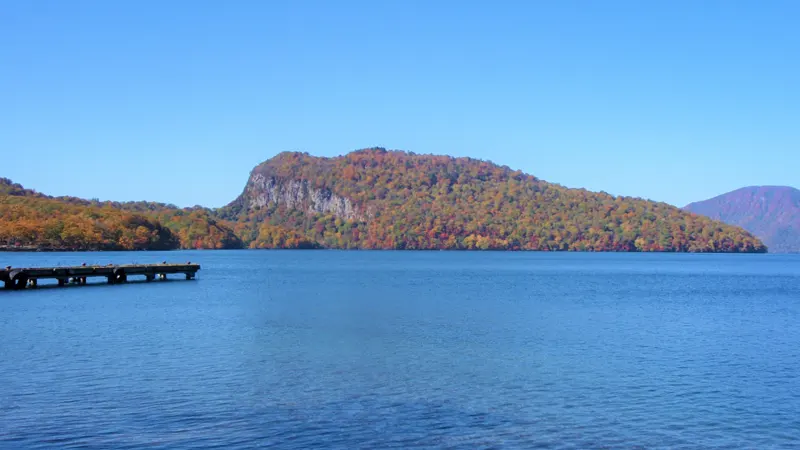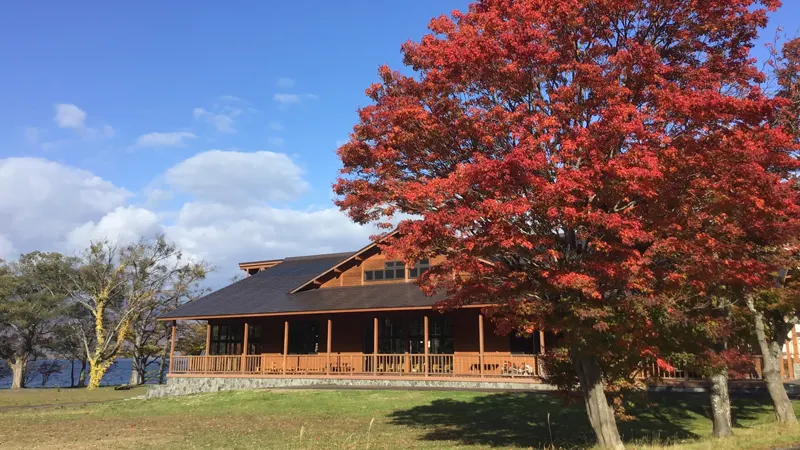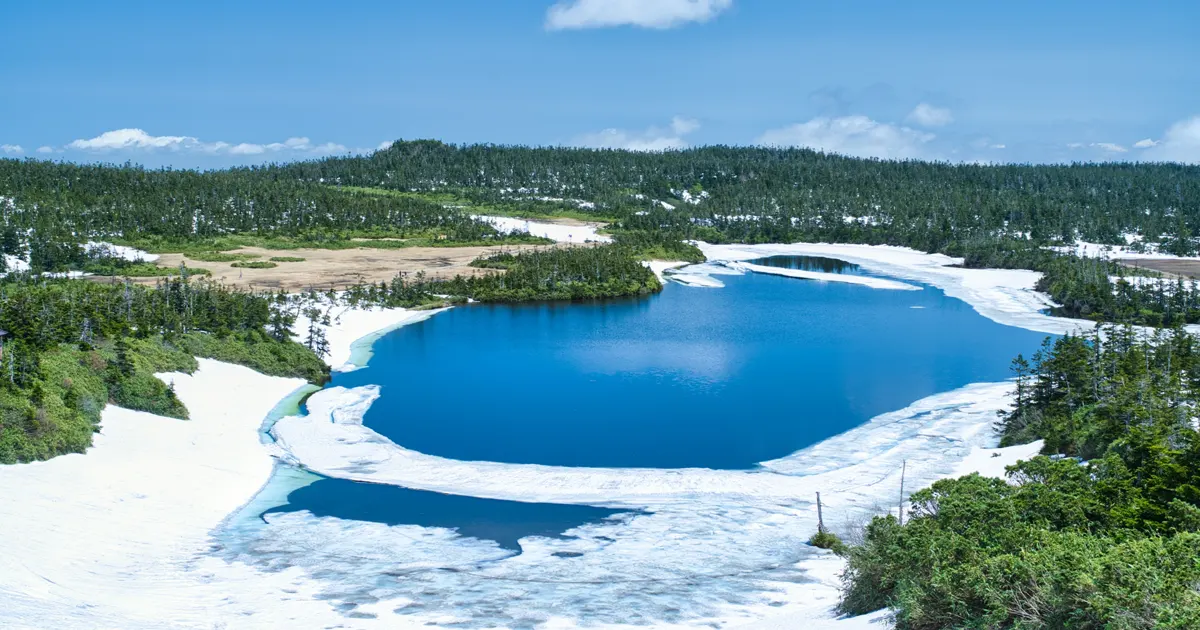
Towada-Hachimantai National Park offers a rare spring phenomenon known as the “Hachimantai Dragon Eye.” It appears only during a limited period each year, making it a valuable natural sight. When conditions come together, this landscape creates a memory that stays with you. The contrast between silence and color makes it suitable for those who want to experience Japan’s natural beauty.
Planning a visit to Hachimantai Dragon Eye & Hachimantai, staying nearby helps you reach the spot smoothly during peak daytime hours. Hotels near Hachimantai for Dragon Eye keep your route simple and reduce unnecessary detours.
Conditions Behind the Hachimantai Dragon Eye
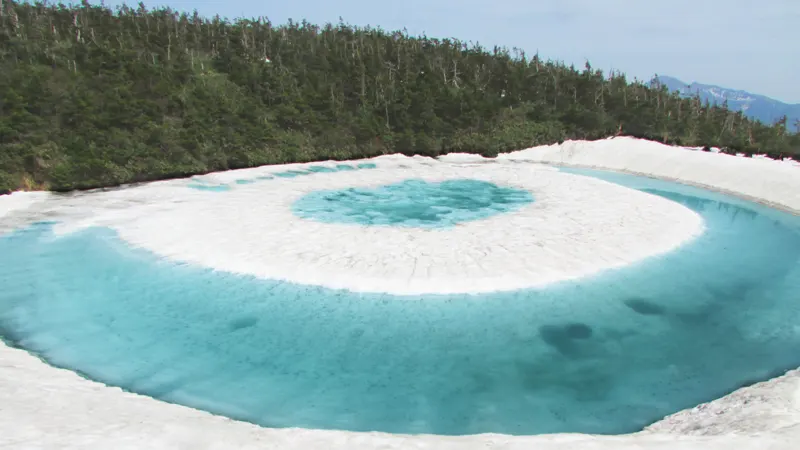
The Dragon Eye appears as the snow at Kagami-numa slowly melts. A combination of snowfall, temperature, and sunlight forms a unique pattern, with snow remaining in the center and water surrounding it.
The emerald-blue surface resembles an eye, which is why it is called the Dragon Eye. Its appearance changes slightly each year, so the same view cannot be seen again.
Best Timing and Daily Changes
The best viewing period is usually from late May to early June. As the snow continues to melt, the time when it forms a perfect circle is short, making timing important.
Some days the center still holds snow, while on others it turns into a deep blue surface. The way it changes day by day is part of its appeal.
Volcanic Landscape and Rich Natural Environment
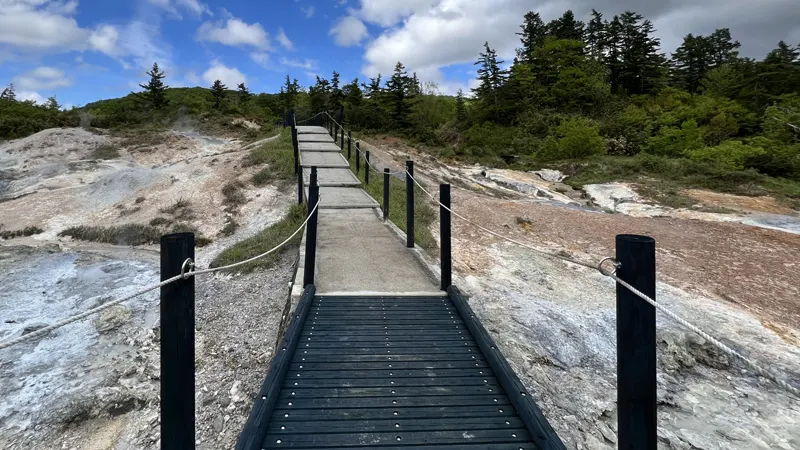
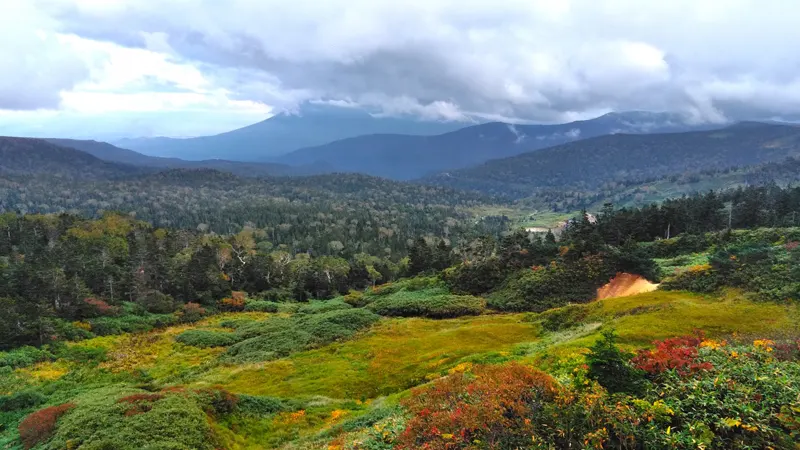
Towada-Hachimantai National Park features terrain shaped by volcanic activity. Rocky surfaces, wetlands, and abundant water exist together in this area.
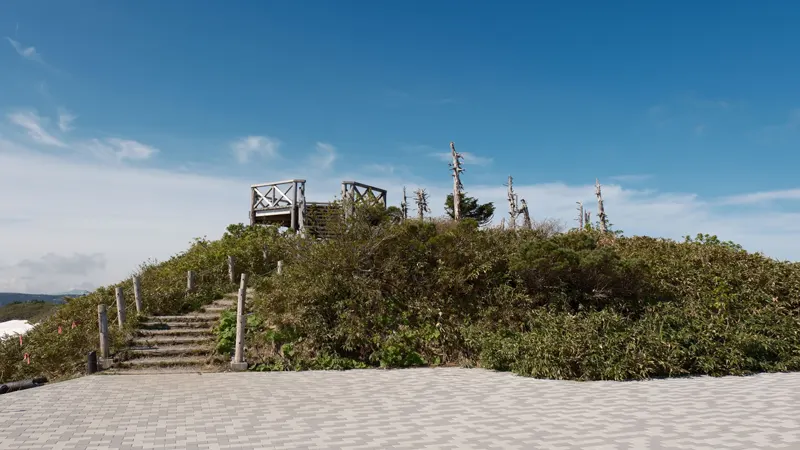
At an elevation of about 1,600 meters, there are almost no artificial structures, and the natural environment is preserved. Being in this setting allows you to feel the strength of the Earth.
Immersive Experience of Silence and Color
The appeal of this area lies in both visual and auditory elements. The white snow and blue water create a strong contrast, giving a striking impression.
In the quiet where only wind and water can be heard, your senses gradually become sharper. Being in an environment different from daily life brings a deep sense of refreshment.
Why Active Travelers Will Enjoy It
Reaching the Dragon Eye requires light hiking equipment. The time spent getting there is part of the experience, making it suitable for those who enjoy walking in nature or traveling for photography. The sense of achievement upon arrival contributes to overall travel satisfaction.
Recognition as a Photography Spot
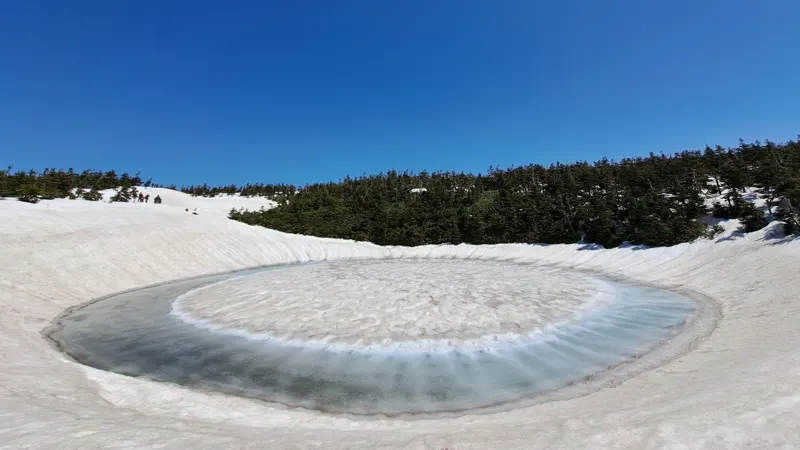
This location is highly regarded by photography enthusiasts both in Japan and abroad. The impression changes depending on light and weather, even with the same composition.
When covered in mist, the atmosphere becomes more dreamlike. Visiting at the right moment allows you to capture a memorable photograph.
Local Cuisine to Complete the Experience
In the surrounding area, food culture has developed to suit the cold climate. A representative dish is Kiritanpo hot pot. Made with Hinai chicken broth and mountain vegetables, it has a simple yet rich flavor. It is widely enjoyed as a meal that warms the body.
Staying around Morioka City while visiting Hachimantai Dragon Eye opens up a wide range of accommodation choices. Hotels in Morioka City allow you to compare prices and reviews to secure better value before booking.
Visitor Information and Travel Notes