
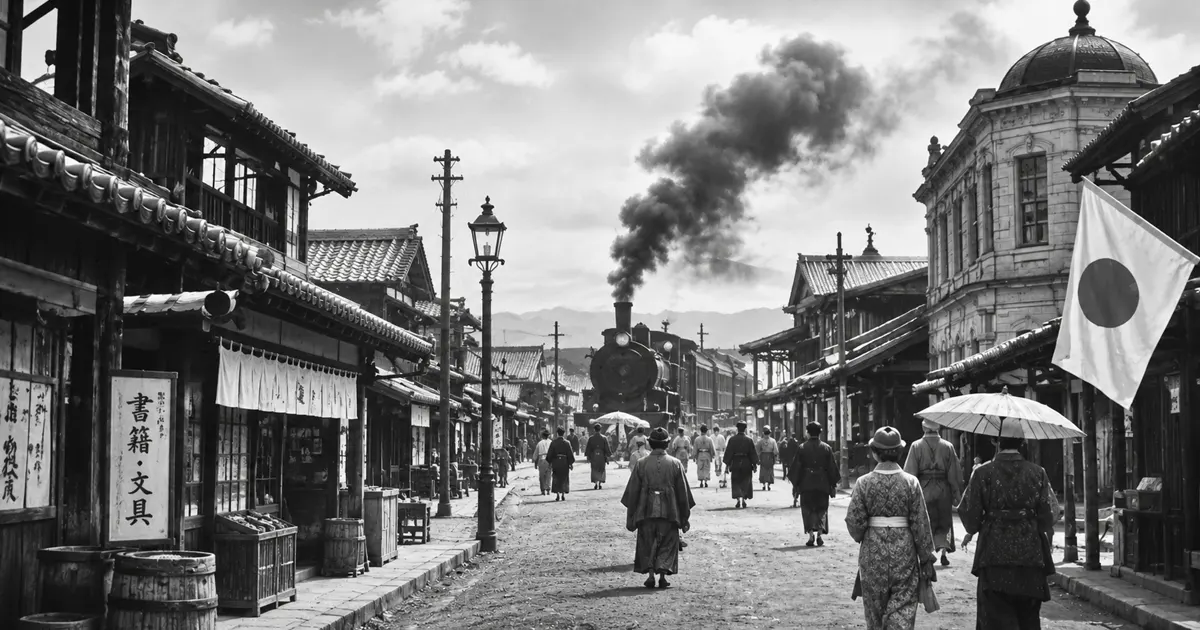
Rurouni Kenshin is a historical action manga set in Japan during the Meiji era, following the life of a swordsman once feared as a deadly assassin. Intense sword battles intertwine with the personal struggles of characters haunted by their past actions. The series appeals not only to readers who enjoy sword-fighting stories but also to those interested in the conflicts and convictions of people living through a period of profound historical change.
What does strength mean when a swordsman capable of killing decides never to take another life? The convictions upheld amid fierce battles and the weight of a past that cannot easily be erased provide important perspectives for understanding the series.
Rurouni Kenshin: Author, Publication, and Volumes
- Title: Rurouni Kenshin
- Story: Nobuhiro Watsuki
- Art: Nobuhiro Watsuki
- Publisher: Shueisha
- Magazine: Weekly Shonen Jump
- Serialization: 1994–1999
- Genres: Shonen Manga, Historical Fiction, Sword-Fighting Action
- Collected Volumes: 28 (Jump Comics / Complete)
Rurouni Kenshin Plot Summary (No Spoilers)
Following the Meiji Restoration, Japan enters a new era as the age of the samurai comes to an end. Kenshin Himura, once feared as “Hitokiri Battosai” during the turbulent final years of the Tokugawa shogunate, travels across the country after renouncing his past killings and vowing never to take another life. He carries a sakabato, a reverse-blade sword with its cutting edge and blunt back positioned opposite those of a conventional Japanese sword. In Tokyo in 1878, Kenshin meets Kaoru Kamiya, a young woman protecting a dojo that teaches Kamiya Kasshin-ryu swordsmanship. Following an incident, he comes to stay at her dojo.
Although Kenshin leads a peaceful daily life, he cannot ignore people in need and frequently becomes involved in conflicts. Through his encounters with Yahiko Myojin, who studies swordsmanship at the dojo, and Sanosuke Sagara, who has made a living as a hired fighter, he gradually gathers companions from different backgrounds. As his relationships with them deepen, Kenshin strives to use the swordsmanship he developed in his former life to protect others rather than take their lives.
However, the establishment of the new Meiji era has not completely erased the conflicts of the past. Old grudges among swordsmen who lived through the final years of the shogunate, along with the ambitions of those dissatisfied with the new government, stand in Kenshin’s way. Some of his enemies neither understand his convictions nor hesitate to kill. Determined to survive his battles without taking another life, Kenshin faces powerful opponents who put his vow to the test.
Rurouni Kenshin Explained: Swordsmanship, Rivalries, and Manga Art
This shonen manga combines sword-fighting action and human drama against the historical backdrop of early Meiji Japan. One of its defining characteristics is how the changing times influence the characters’ values and approaches to combat.
- The Reverse-Blade Sword and Hiten Mitsurugi-ryu: Kenshin practices Hiten Mitsurugi-ryu, a traditional school of swordsmanship renowned for its extraordinary speed and power. Its techniques are inherently intended to kill opponents with a single strike. By performing these deadly techniques with the sakabato, a special sword whose cutting edge and blunt back are reversed, Kenshin creates a distinctive tension between his vow never to kill and the intensity of his battles.
- Swordsmen with Conflicting Convictions: Among Kenshin’s opponents are individuals who uphold samurai pride or follow their own sense of justice. Their differing reasons for fighting create confrontations whose significance extends beyond victory or defeat.
- Manga Art That Conveys Movement: Rapid movements and the trajectories of sword strikes are depicted through sequences of panels and bold compositions. The deliberate use of pauses before and after techniques are executed also emphasizes the speed and power of combat.
Rurouni Kenshin Review: Strengths and Limitations
One of Rurouni Kenshin’s greatest strengths is its refusal to equate swordsmanship with moral righteousness, instead connecting the outcomes of battles to the characters’ convictions and unresolved conflicts from the past. The contrast between Kenshin’s normally gentle demeanor and his sharp expression during combat, the gradual revelation of his opponents’ abilities, and compositions that emphasize the power of sword techniques give confrontations a strong sense of tension. However, the frequent use of superhuman physical abilities and unrealistic swordsmanship may divide readers who prefer historically accurate period dramas. Overall, the series successfully combines a historical setting with the bold combat sequences characteristic of shonen manga.
Rurouni Kenshin Analysis: Can a Vow Never to Kill Atone for Past Sins?
In Rurouni Kenshin, is a vow never to kill enough to atone for past sins? Although Kenshin rejects the period of his life when he worked as an assassin, he has not abandoned the swordsmanship he acquired during those years. Instead, he now uses the abilities that once allowed him to take lives to protect them. However, even when wielding his reverse-blade sword, he risks injuring his opponents, while battles against powerful enemies also endanger his own life. Furthermore, those who know Kenshin’s past do not necessarily judge him solely by his present actions. These portrayals suggest that his vow never to kill is not a means of erasing the past but a choice to continue bearing responsibility for it.
An important aspect of this question is that Kenshin does not use the historical cause of the Meiji Restoration to justify his actions. His participation in the struggle to establish a new era does not, in his eyes, absolve him of responsibility for the lives he took. Moreover, the peaceful life Kenshin seeks to protect cannot be sustained through swordsmanship alone. His willingness to place limits on how he uses his power, despite possessing the ability to harm others, reflects a fundamental change in his way of life. From this perspective, the atonement portrayed in the series can be interpreted not as obtaining ultimate forgiveness for past sins, but as accepting that the past cannot be changed while continuing to take responsibility for one’s actions in the present.
Rurouni Kenshin: Finding Strength in a Changing Japan
What leaves a lasting impression in Rurouni Kenshin is the reality that people’s hearts do not necessarily change as quickly as the times around them. The swordsmen searching for a place in a new society embody both an attachment to values that have been lost and a determination to move toward the future. As readers follow Kenshin’s journey, they are left to consider what strength truly enables a person to accomplish and how individuals can come to terms with their own past.