
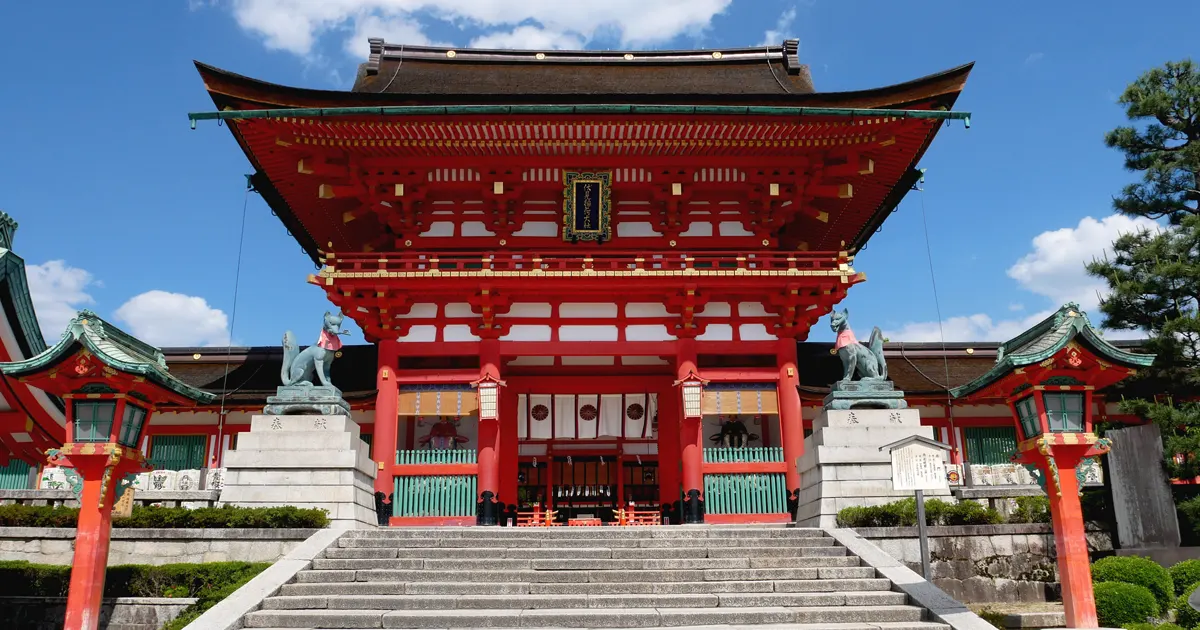
Kyoto is home to numerous temples, shrines, and historic streetscapes, with many sightseeing destinations accessible by public transportation. At Fushimi Inari Taisha, visitors can walk through the distinctive landscape of Senbon Torii, where rows of vermilion torii gates lead toward Mount Inari. After visiting the shrine, the restaurants and local shops in the surrounding neighborhood offer another way to explore Kyoto on foot.
The shrine is about a five-minute train ride from Kyoto Station, making it easy to include during a day of sightseeing in the city. Staying in Kyoto provides more flexibility for travel time, allowing a walk on Mount Inari and visits to other attractions at different times of the day.
Fushimi Inari Taisha Visitor Information
Check the latest weather forecast before your visit.
- Address: Fushimi Ward, Kyoto City, Kyoto Prefecture
- Opening hours: No closing time
- Prayer hours: 8:30 a.m.–4:30 p.m. (reception until around 4:00 p.m.)
- Official Website: Fushimi Inari Taisha
Seasonal Events at Fushimi Inari Taisha
The Inari Festival takes place in spring, beginning with the Shinko Festival on the Sunday closest to April 20 and continuing through the Kanko Festival on May 3. Five mikoshi portable shrines travel through the local parish area during the most important annual ritual at Fushimi Inari Taisha.
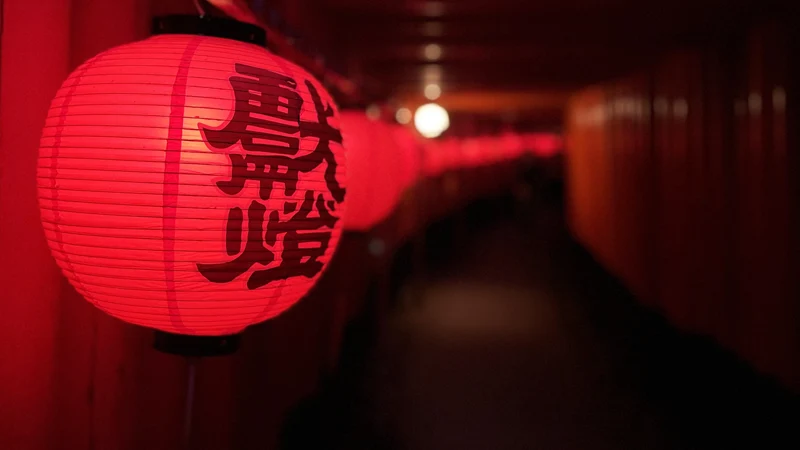
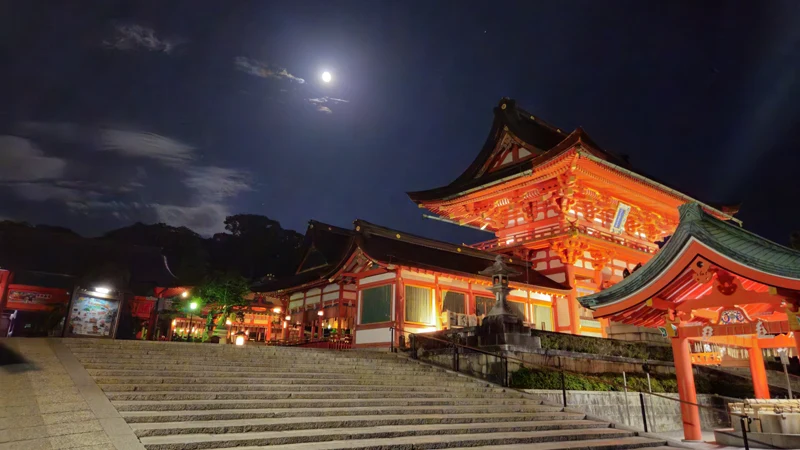
During the Motomiya Festival in July, stone lanterns and several thousand donated lanterns illuminate the shrine grounds and Mount Inari during the Yoimiya Festival on the previous evening. Around 400 painted lantern panels are also displayed near the Outer Worship Hall, creating a view of the grounds different from daytime.
At the Hitaki Festival on November 8, a ceremony at the Main Shrine is followed by the burning of more than 100,000 wooden prayer sticks at the Shinen ceremonial grounds. Mikagura sacred music is performed that evening, featuring traditional instruments such as the wagon zither and flutes.
Lesser-Known Sights Beyond Senbon Torii
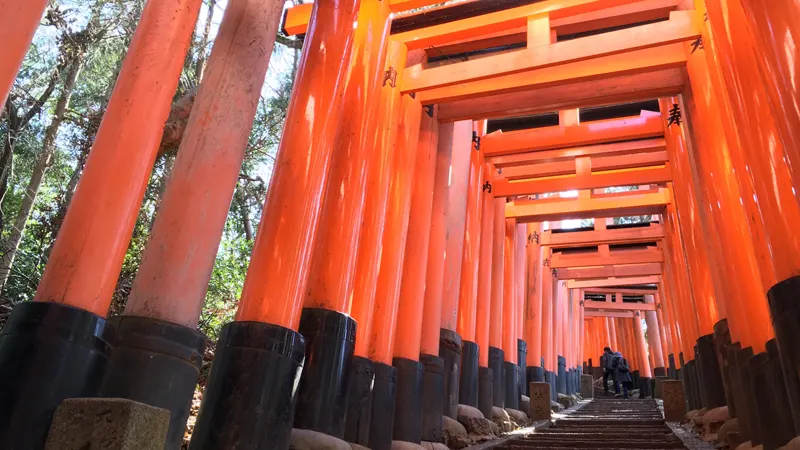
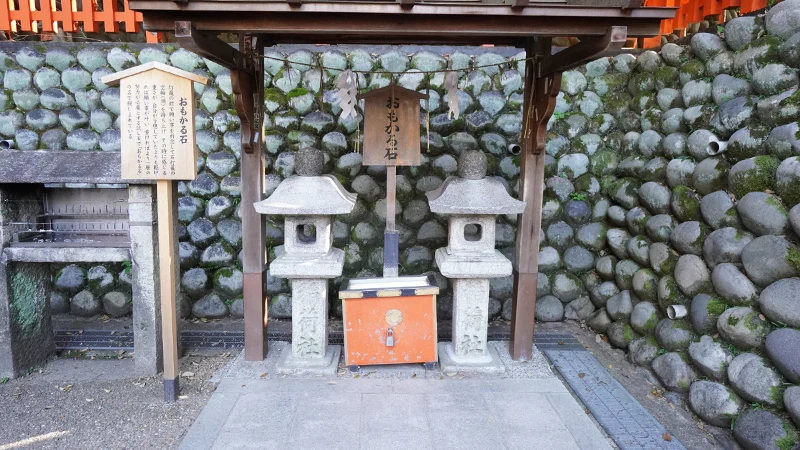
Those walking beyond Senbon Torii can also stop at the Omokaru Stone at Okusha Hohaisho. Visitors make a wish and lift the round stone at the top of a stone lantern, with the difference between its expected and actual weight used to predict whether the wish will come true. Farther into the mountain, Mitsurugisha has a stone called Tsurugi-ishi and a well known as Yakiba-no-mizu, both associated with the legend of the famous sword Kogitsunemaru. From behind the sacred site on Kojinmine, views extend across Kyoto and north of the city center, revealing another side of Mount Inari beyond its torii gates.
Extend Your Fushimi Inari Visit with a Kyoto Stay
For an overnight stay, areas around Kyoto Station or Shijo and Kawaramachi are practical options for reaching the next destination. Kyoto Station provides convenient Shinkansen and rail connections in several directions, while Shijo and Kawaramachi have concentrations of restaurants and commercial facilities. Choosing an area based on the following day’s destination can make the itinerary easier to organize. The accommodation information below can also be used when looking for a place to stay.
An itinerary that includes a stay in Kyoto provides time for dinner in the city and sightseeing the following day. Consider your return time and next destination when planning a schedule that fits your trip.