
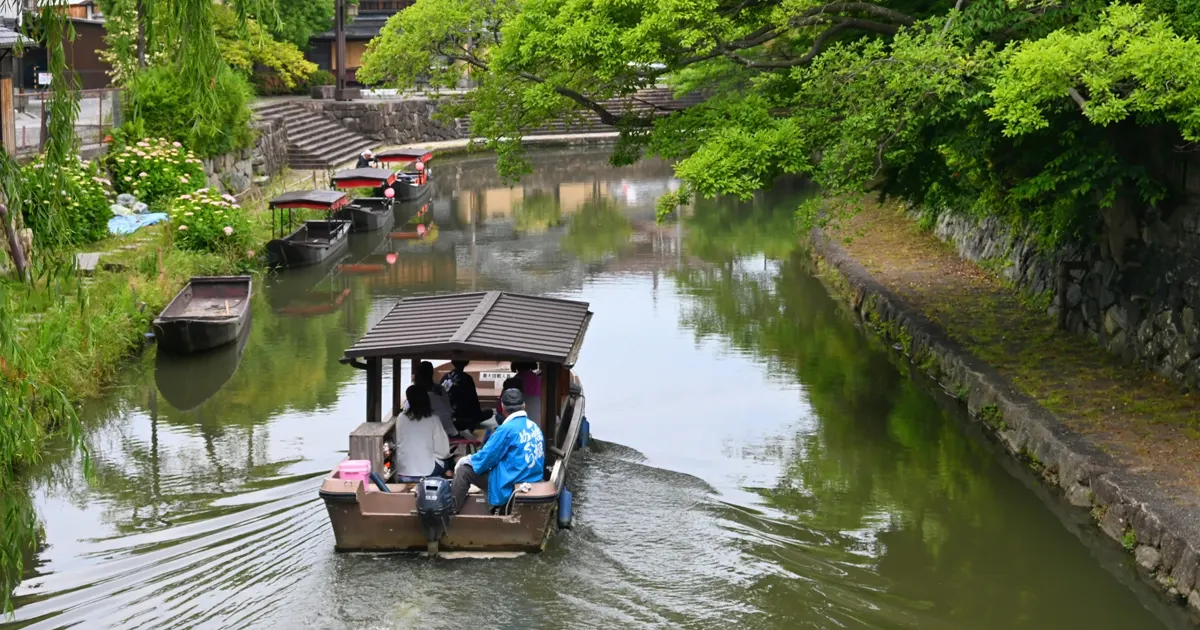
Shiga Prefecture’s Omihachiman City lies east of Lake Biwa, with historic streets associated with Omi merchants and traditional waterside scenery. Along Hachiman-bori Canal, visitors can walk past white-walled townhouses, stone-paved paths, and the waterfront, an area also used as a filming location for period dramas and movies.
Nearby, travelers can stop at shops housed in traditional townhouses or view the seasonal scenery from a Japanese-style boat. For travelers combining Omihachiman with Kyoto, the Hachiman-bori area is easy to explore even during a short stopover. Staying overnight in Omihachiman allows more time to walk through town and include an evening visit to Hachiman-bori and dinner nearby in the itinerary.
Omihachiman Sightseeing Information
- Address: Omihachiman City, Shiga Prefecture
- Closed: None
- Hours: Open for walking at any time
- Official Website: Omihachiman Official Tourism Website
Seasonal Highlights in Omihachiman
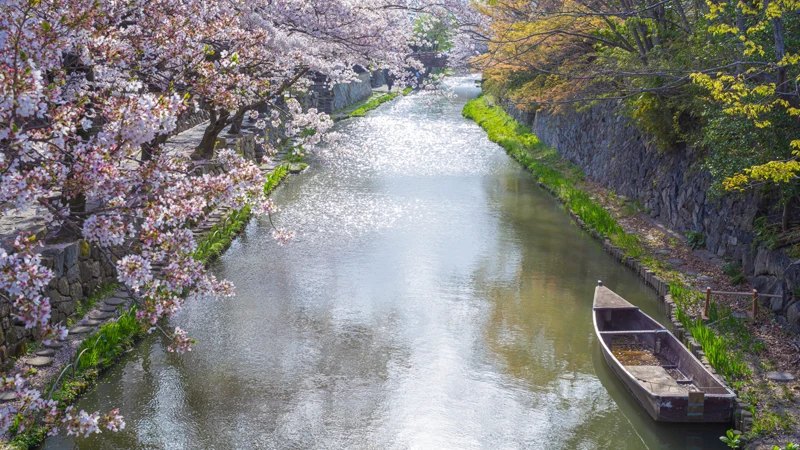
Cherry Blossoms Along Hachiman-bori Canal
In spring, cherry blossoms along Hachiman-bori Canal create a scenic combination with the white-walled streets and reflections on the water. The Hachiman-bori boat tour also offers views of the blossoms from the water, followed later in the season by irises along the canal. Blooming conditions vary with the weather, so checking the latest conditions before visiting is recommended.
Summer Greenery and Autumn Colors
In summer, willow trees along the canal create a distinctive waterside landscape, while autumn foliage adds seasonal color to Hachiman-bori. In addition to exploring on foot, the approximately 30-minute Hachiman-bori boat tour provides views of white-walled buildings and seasonal scenery from close to the water.
Hachiman Festival in April
The Hachiman Festival is held every year on April 14 and 15 at Himure Hachimangu Shrine near Hachiman-bori. The Sagicho-style torch events on April 14 feature the lighting of large torches, while the drum festival on April 15 includes a procession with large taiko drums, offering a look at Omihachiman traditions beyond a regular walk through town.
Hachiman-bori Festival in Autumn
In autumn, the Hachiman-bori Festival takes place around the canal and the historic streets associated with Omi merchants. Lighting displays and events using traditional townhouses are held during the festival, creating a different atmosphere along the waterfront and surrounding streets compared with daytime.
Hachiman-bori Highlights & Nearby Attractions
Shinmachi Street|Omi Merchant Town Walk
A short walk from Hachiman-bori, Shinmachi Street is lined with former residences and townhouses associated with Omi merchants. Latticed facades and white walls remain along the street, while some traditional buildings now house cafés and shops. Walking through the area provides a closer look at the townscape shaped by Omihachiman’s merchant history. Publicly accessible merchant houses and museums can also be included when time allows.
- Time required: 40–50 min
- Fee: Free (separate admission fees may apply)
Hachiman-yama Ropeway|Views Over Omihachiman
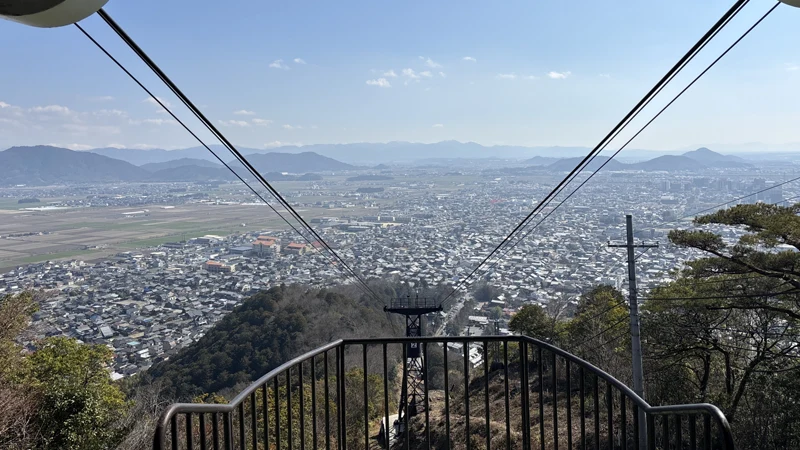
Mount Hachiman rises to 271 meters and is accessible by ropeway. From the observation area, the view extends across Omihachiman, Lake Biwa, and the surrounding landscape. The remains of Hachiman-yama Castle, built by Toyotomi Hidetsugu, are also located on the mountain. Combining the ropeway with Hachiman-bori adds an elevated view of the area to a walking itinerary.
Hakuunkan|Historic Building Near Hachiman-bori
Built in 1877, Hakuunkan is a Western-influenced building originally used as an elementary school. Its white exterior and decorative architectural details distinguish it from the traditional streets around Hachiman-bori. The building contains tourism information and displays related to local culture. Located about a five-minute walk from Hachiman-bori, it can be included easily during a walk through the area.
Hachiman-bori Q&A
- How Much Time Do I Need for Hachiman-bori?
-
Allow about 1.5 hours to combine a walk around Hachiman-bori with a boat ride. If you want more time for photos and a slower walk, plan for about 2 hours.
- Should I Book the Hachiman-bori Boat Tour in Advance?
-
During busy tourist seasons, boats may fill up. Advance booking through the official website is recommended, although same-day tickets may be available when space remains.
- Can I Rent a Kimono Near Hachiman-bori?
-
Yes. Kimono rental shops are available near Hachiman-bori, allowing travelers to combine a kimono rental with a walk through the historic streets or photography.
- What Other Attractions Can I Visit Near Hachiman-bori?
-
The Hachiman-yama Ropeway and the historic townscape are within walking distance, making them easy to combine with Hachiman-bori in the same sightseeing itinerary.
- How Long Does It Take to Walk Along Hachiman-bori?
-
The canal path can be explored on foot. Walking from one end to the other takes about 30 minutes.
- What Is the Difference Between the Hachiman-bori Canal Tour and the Suigo Tour?
-
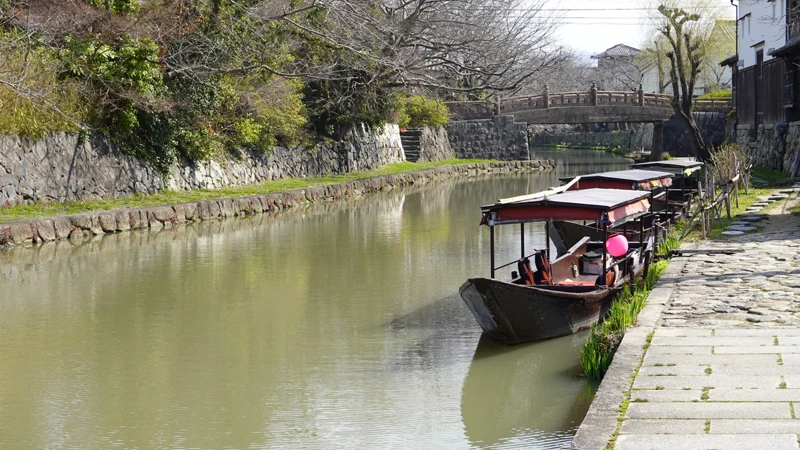
The Hachiman-bori Canal Tour and the Suigo Tour travel through two different areas of Omihachiman. The Hachiman-bori tour focuses on the historic canal and townscape, while the Suigo Tour travels through the surrounding rural waterside landscape.
The Hachiman-bori Canal Tour takes about 35 minutes and passes through the historic canal area, with views of Omi’s traditional townscape and surrounding scenery. The fare is 1,500 yen for adults and 1,000 yen for children. The boarding point is about a 5-minute walk from the ropeway station.
The Suigo Tour follows a different route through the rural rice fields and waterways around Omihachiman. Cherry blossoms line parts of the waterside scenery in spring. The tour operates only as a private charter, so the cost may be higher for small groups.
Where to Stay in Omihachiman
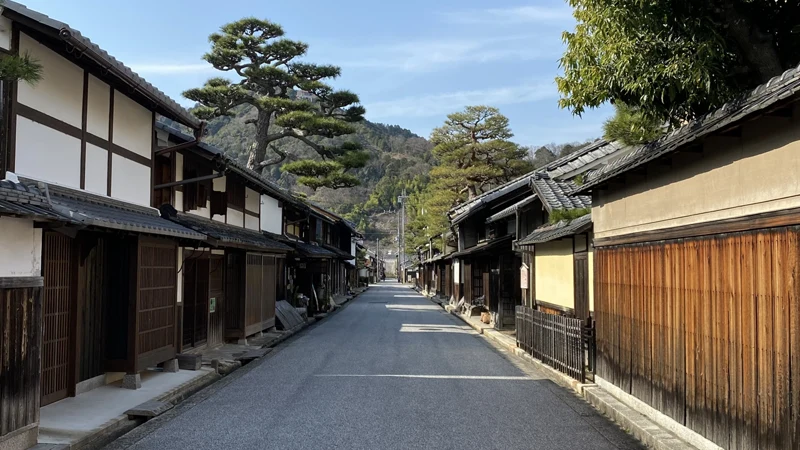
For an overnight stay, the areas around Omihachiman Station and Hachiman-bori offer different advantages. The station area provides convenient rail access to Kyoto and Hikone, making it suitable for travelers planning to continue sightseeing the next day. In contrast, staying near Hachiman-bori makes it easier to explore the Omi merchant townscape on foot and spend more time in the area after sightseeing. The accommodation information below can also help when choosing a place to stay.
- Popular Hotels Near Omihachiman Station
- Stay in a Machiya Near Hachiman-bori
- Popular Hotels Near Kyoto Station
Using Omihachiman as a base allows more time to include the suigo waterways and other attractions around the city that may be difficult to fit into a day trip. Choosing where to stay based on the next day’s destination can also help create a more efficient travel itinerary.