
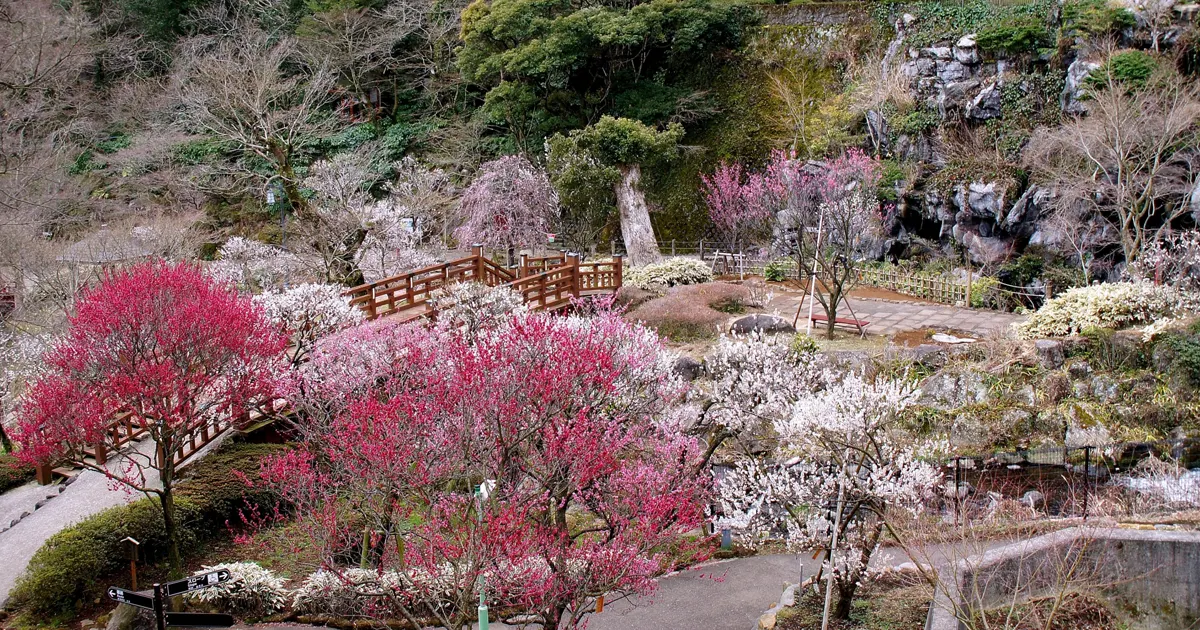
Atami City in Shizuoka Prefecture is a tourist destination known for its hot springs and seaside scenery, and it is easily accessible for a day trip from the Tokyo metropolitan area. At Atami Plum Garden, 469 plum trees representing 60 varieties bloom in sequence from early- to late-blooming types, allowing visitors to see plum blossoms from winter through early spring. During the plum blossom season, a visit can combine a walk through the garden with the footbath and nearby Kinomiya Shrine.
Atami Plum Garden is about a 10-minute walk from JR Kinomiya Station, making it easy to include in a day trip from the Kanto region. Staying overnight in Atami provides more time to visit the garden while leaving other parts of the day for the hot spring district and nearby attractions.
Visitor Information for Atami Plum Garden
- Address: Atami City, Shizuoka Prefecture
- Closed: Open year-round
- Hours: No restrictions on entry times
- Admission: Free (admission fee applies only during the Atami Baien Plum Festival)
- Official Website: Atami Official Tourism Website
Seasonal Guide to Atami Plum Garden
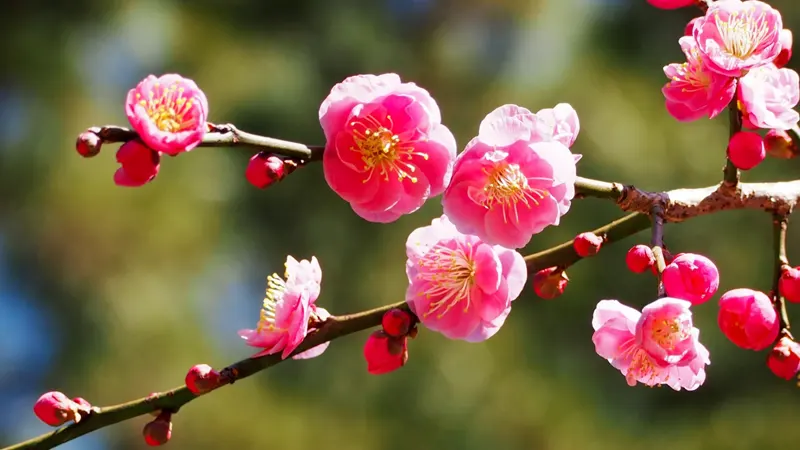
The Atami Baien Plum Festival is held annually from early January to early March. The garden has 469 plum trees representing 60 varieties, including trees more than 100 years old, with early-, mid-, and late-blooming varieties flowering in sequence. During designated paid-admission periods of the festival, admission is charged from 8:30 a.m. to 4:00 p.m., with general admission at 300 yen and free entry for junior high school students and younger.
During the plum festival, a footbath and souvenir shops are set up inside the garden, and entertainment and street performances are held on selected days. Roads and parking areas around the garden are expected to be crowded, so public transportation can make getting around easier.
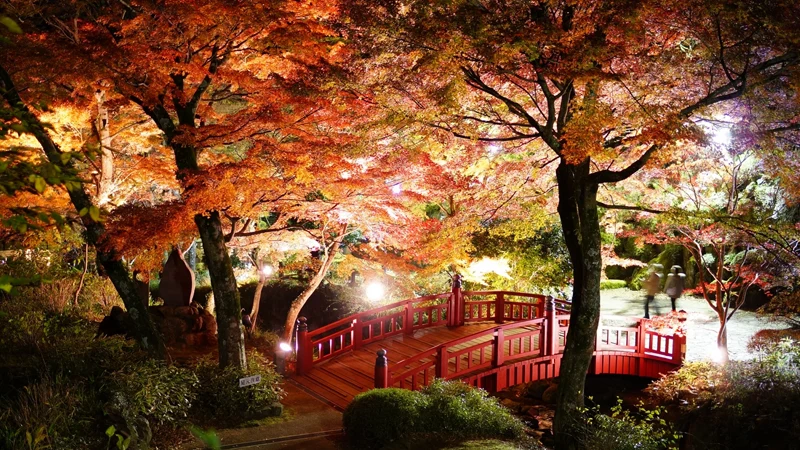
In addition to plum blossoms, the garden has fresh greenery from May to June and autumn foliage from mid-November to early December. The Atami Baien Momiji Festival is held during the autumn foliage season, providing another opportunity to visit for scenery different from the plum blossom season.
Seasonal Highlights of Atami Plum Garden
Early-Blooming Plum Trees
Atami Plum Garden has 469 plum trees representing 60 varieties, including early-, mid-, and late-blooming types. The earliest varieties begin flowering in winter, followed by other varieties through early spring. Red and white plum blossoms can be seen along the garden paths and around the stream during the flowering season.
- Estimated time: 40–60 minutes
- Admission: 300 yen during designated paid-admission periods of the Atami Baien Plum Festival
Footbath During the Plum Festival
A footbath is available inside Atami Plum Garden during the Atami Baien Plum Festival. It provides a place to rest while walking through the garden during the plum blossom season.
- Estimated time: 15–20 minutes
- Admission: Free
Stream and Bridges in the Garden
A stream runs through Atami Plum Garden, with several bridges connecting the paths on either side. The combination of flowing water, bridges, and surrounding plum trees creates one of the garden’s characteristic seasonal views.
- Estimated time: 10–15 minutes
- Admission: Included with garden admission
Things to Do Near Atami Plum Garden
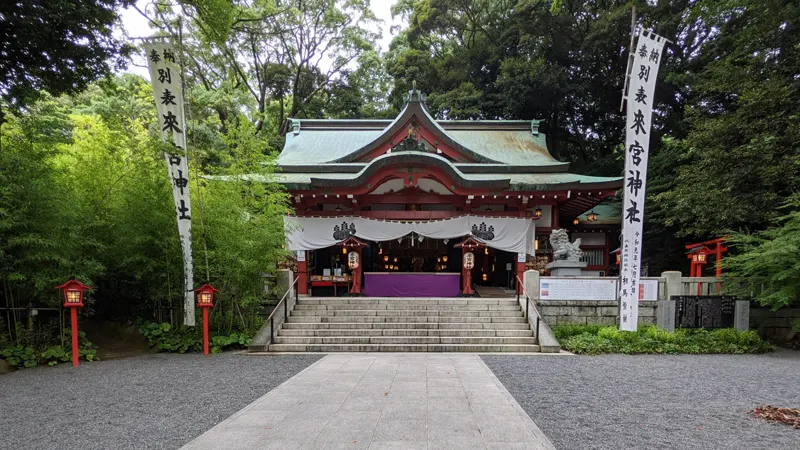
Kinomiya Shrine
Kinomiya Shrine is within walking distance of Atami Plum Garden. The shrine is known for its large sacred camphor tree and can be combined with a visit to the garden when exploring the Kinomiya area.
MOA Museum of Art
MOA Museum of Art is accessible by bus or taxi from Atami Station. Its collection includes Japanese and East Asian art, and the museum grounds overlook Sagami Bay. As most of the collection is displayed indoors, the museum is also an option when planning activities for rainy weather.
Where to Stay Near Atami Plum Garden

For an overnight stay in Atami, options include the city center, where many hotels and ryokan are located, as well as Izusan, Taga, and Ajiro. Atami Plum Garden is about a 10-minute walk from JR Kinomiya Station and is accessible by train. Atami also has hot springs, seaside areas, and nearby attractions that can be combined with a visit to the garden. The accommodation information below can also be used when looking for a place to stay.
Atami Plum Garden can also be visited on a day trip from the Kanto region. Consider the travel time to Atami, how long you plan to spend in the garden, and other places you want to visit nearby when planning an itinerary that fits your schedule.