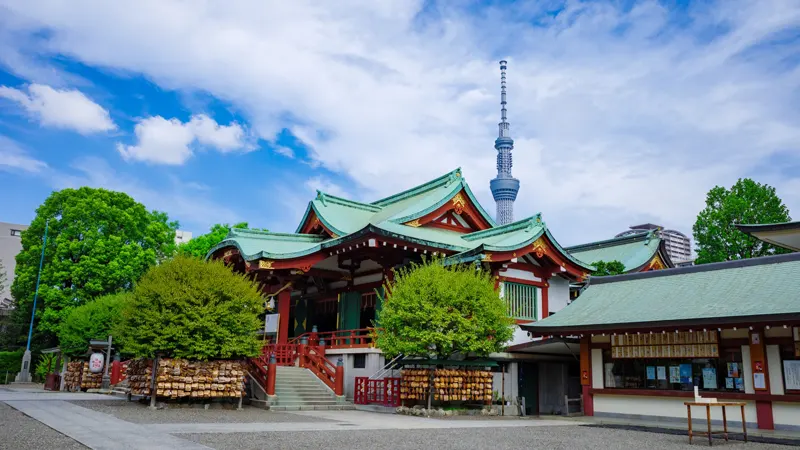
Kameido Tenjin Shrine, located in Tokyo’s traditional downtown area, offers a calm setting where scholarship and seasonal flowers come together. In spring, wisteria trellises spread across the grounds, creating a landscape shaped by both history and nature. The combination of quiet prayer and vibrant scenery allows visitors to experience the essence of Japanese culture even in a short visit.
Location: Kameido, Koto City, Tokyo
Closed Days: None
Hours: 24 hours
Hours: 9:00 AM – 5:00 PM (shrine office)
Admission: Free
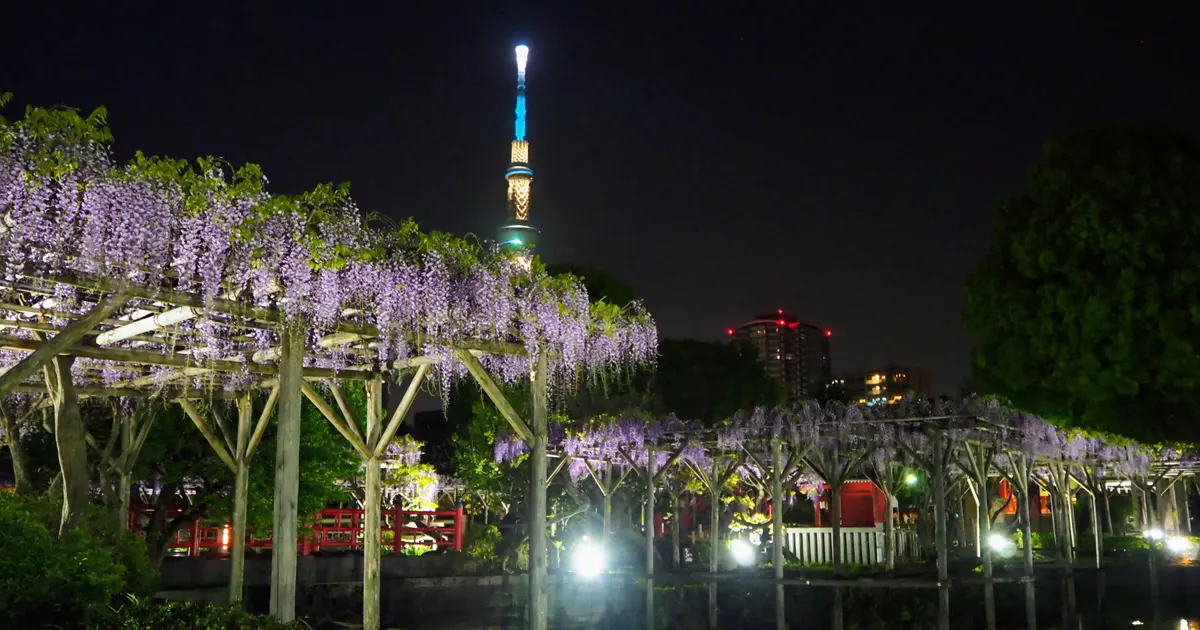
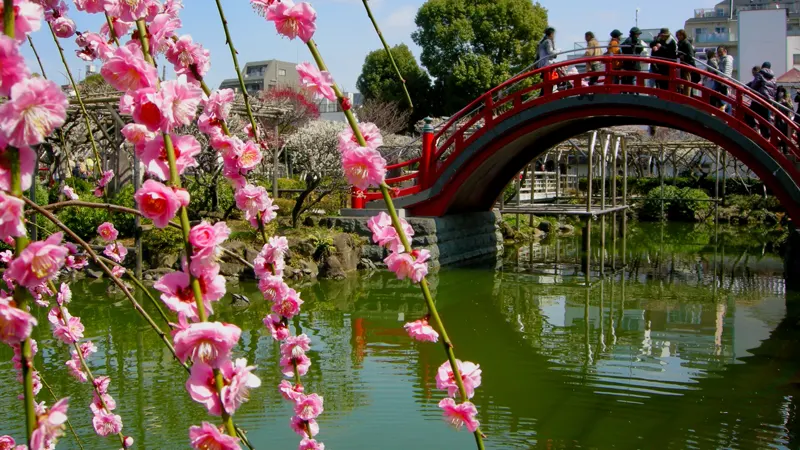
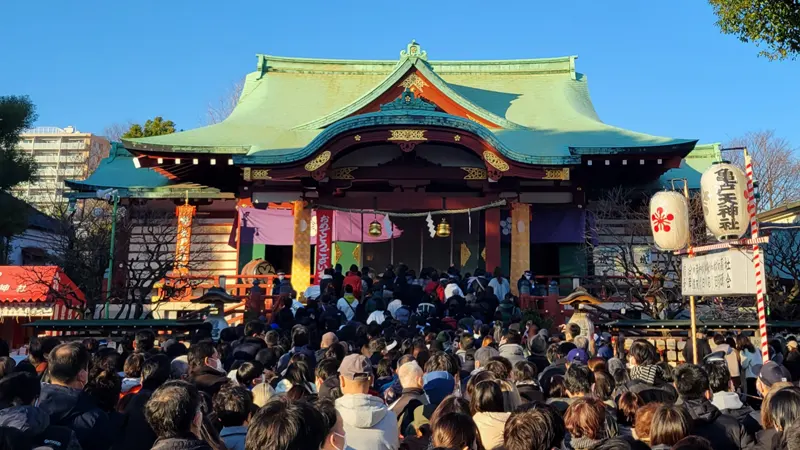
Kameido Tenjin Shrine hosts seasonal events throughout the year, including the January Usokae ritual, February plum festival, April wisteria festival, and October chrysanthemum festival. The wisteria season features daytime views and illuminated night scenes with different atmospheres. Updated bloom timing and event details are available on the Kameido Tenjin Shrine Official Website before visiting.
Kameido Tenjin Shrine History and Value
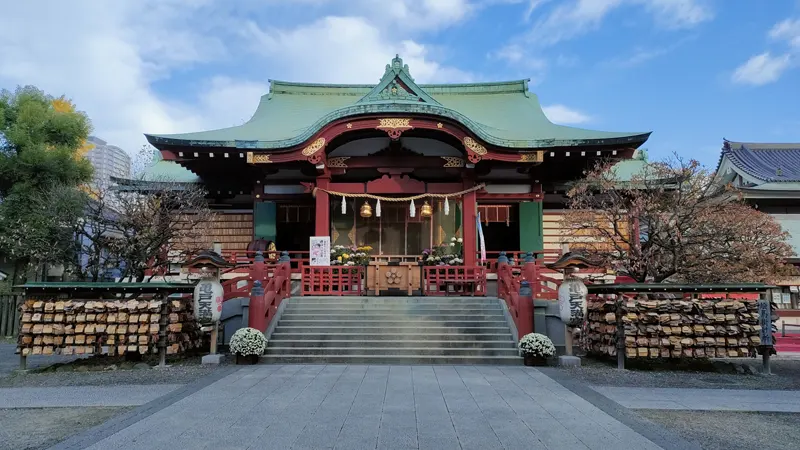
Founded in 1661 during the Edo period , this shrine was designed in the style of Dazaifu Tenmangu Shrine. Its main deity, Sugawara no Michizane, is known as the god of learning, attracting many visitors from across Japan during exam seasons. The shrine was also developed by the Tokugawa shogunate as part of Edo’s reconstruction, giving it notable historical significance.
The composition of wisteria and drum bridges depicted by ukiyo-e artist Utagawa Hiroshige has been preserved to this day, making it an important cultural resource from the perspective of Japanese art. It is also said to have influenced the French painter Claude Monet, placing the shrine within an international art historical context. This intersection of history and art defines the unique character of the site.
How to Explore Kameido Tenjin Shrine
Upon entering the grounds, a sense of calm and openness becomes immediately noticeable. Following the traditional flow of worship naturally brings a feeling of mental clarity. Even a short stay offers an opportunity to experience Japan’s spiritual culture.
During the wisteria festival in spring , the highlights become especially rich. Soft daylight creates a gentle atmosphere, while evening illumination transforms the scenery into something more atmospheric. Visiting early in the morning or on weekdays allows for a quieter experience.
The Flow of Time Connected by Three Drum Bridges
Three drum-shaped bridges lead from the entrance to the main hall, each symbolizing the past, present, and future . Crossing them in order offers a moment to quietly reflect on oneself. A slow walk while observing the surroundings allows a deeper understanding of the meaning behind this space.
Photo Spot Featuring Tokyo Skytree and the Drum Bridge
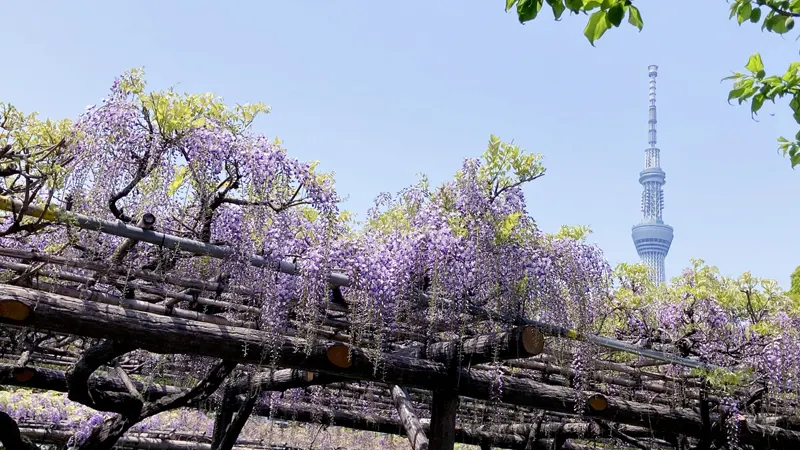
Within the shrine grounds, there is a viewpoint where both the drum bridge and Tokyo Skytree can be captured in a single frame. From the bridge, looking down over the wisteria trellises creates a composition with strong depth. The changing light throughout the day alters the scene, encouraging multiple photo opportunities.
Kameido Tenjin Shrine Visitor Information
Why is it called Kameido?
The name originates from an old well shaped like a turtle shell, and turtles can still be seen throughout the grounds today.
Why are there statues of cows at the shrine?
Sugawara no Michizane has a strong connection with cows, which are regarded as symbols of wisdom and protection.
Can people visit for reasons other than academic success?
Yes. Many visitors come for protection from misfortune or simply to refresh themselves.
Nearby Attractions to Visit After Kameido Tenjin Shrine
After visiting Kameido Tenjin Shrine, nearby attractions can be explored on foot or with a short ride. The area blends historical and modern elements, offering a variety of experiences within a limited time.
Tokyo Skytree Town Panoramic View Experience
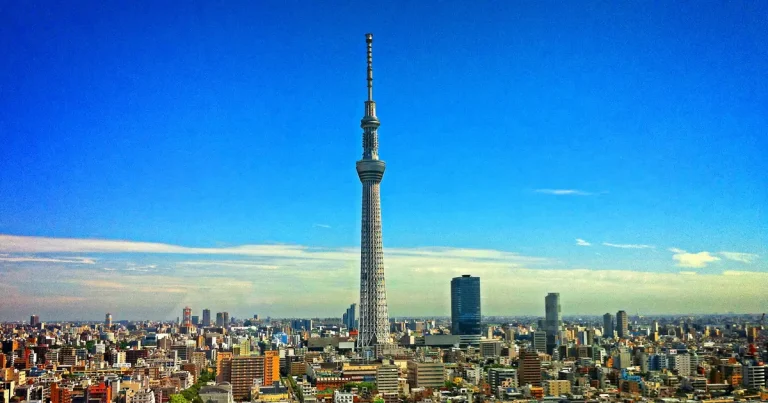
This Tokyo landmark can be reached in about 15 to 20 minutes on foot. From the 634-meter-high observation deck, the cityscape extends widely, and on clear days, Mount Fuji can be seen in the distance. Tokyo Solamachi, located within the complex, provides a range of shopping options, making it a convenient stop after sightseeing.
See also this article
Tokyo Skytree Guide: Views, Culture, and Food
Tokyo Skytree is an essential destination if you want to spend a “special few hours” during your visit to Tokyo. The view from 450 meters above ground is not…
A stay near Tokyo Skytree gives you more hotel options while keeping Kameido Tenjin Shrine within easy reach. Check prices and reviews first so your trip feels smart, not rushed.
Asakusa Senso-ji Temple Edo Culture and Lively Streets
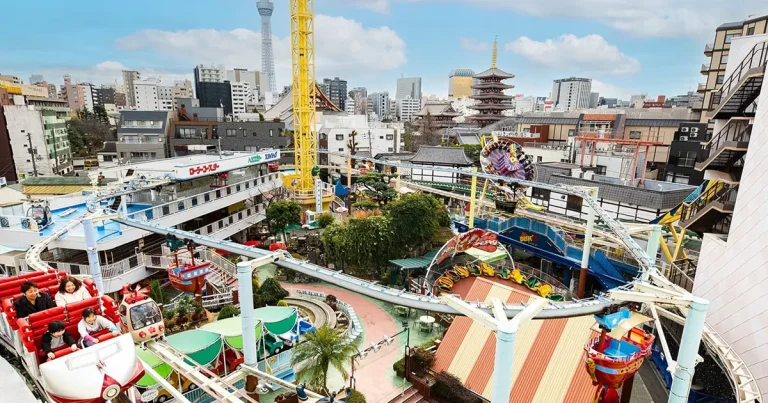
Located about 20 minutes away by train or bus, this well-known destination offers a lively atmosphere. Passing through Kaminarimon Gate leads to Nakamise Street, lined with traditional sweets and local crafts. The area combines a historic temple with the energy of a downtown district.
See also this article
Stay Near Asakusa & Hanayashiki for a Better Tokyo Visit
Asakusa and Hanayashiki in Taito City, Tokyo, are popular areas that are easy to combine with sightseeing in Tokyo. A day trip is possible, but staying overn…
Kameido Katori Shrine and Victory Blessings
This shrine is just a few minutes’ walk from Kameido Tenjin Shrine. Known for blessings related to success and competition , it is often visited by those involved in sports or personal challenges. The surrounding shopping streets retain a Showa-era atmosphere, making a simple stroll enjoyable.
Start Your Kameido Tenjin Shrine Visit with Purpose
Kameido Tenjin Shrine offers a place where blessings for learning and seasonal floral beauty come together. Its integration of history, art, and nature provides a highly satisfying experience even in a short visit. For those seeking a sense of traditional Japanese culture while in Tokyo, it remains a well-suited destination.